
05 Oct Kim Byrne – Making a Difference for Dyslexic Learners
Every dedicated teacher wants the best for the children in their classroom. But this can be challenging when some pupils learn in a different way, or don’t make expected progress with core skills like reading and spelling.
Around the country, many primary school teachers are quietly working behind the scenes to address this need. Often upskilling in their own time and funding training out of their own pockets, these teachers demonstrate a deep commitment to their practice and an emerging willingness to critically evaluate traditional methods that have been proven not to work. They are instead adopting evidence-aligned structured literacy approaches which are proving to be transformative for dyslexic children across Irish classrooms.
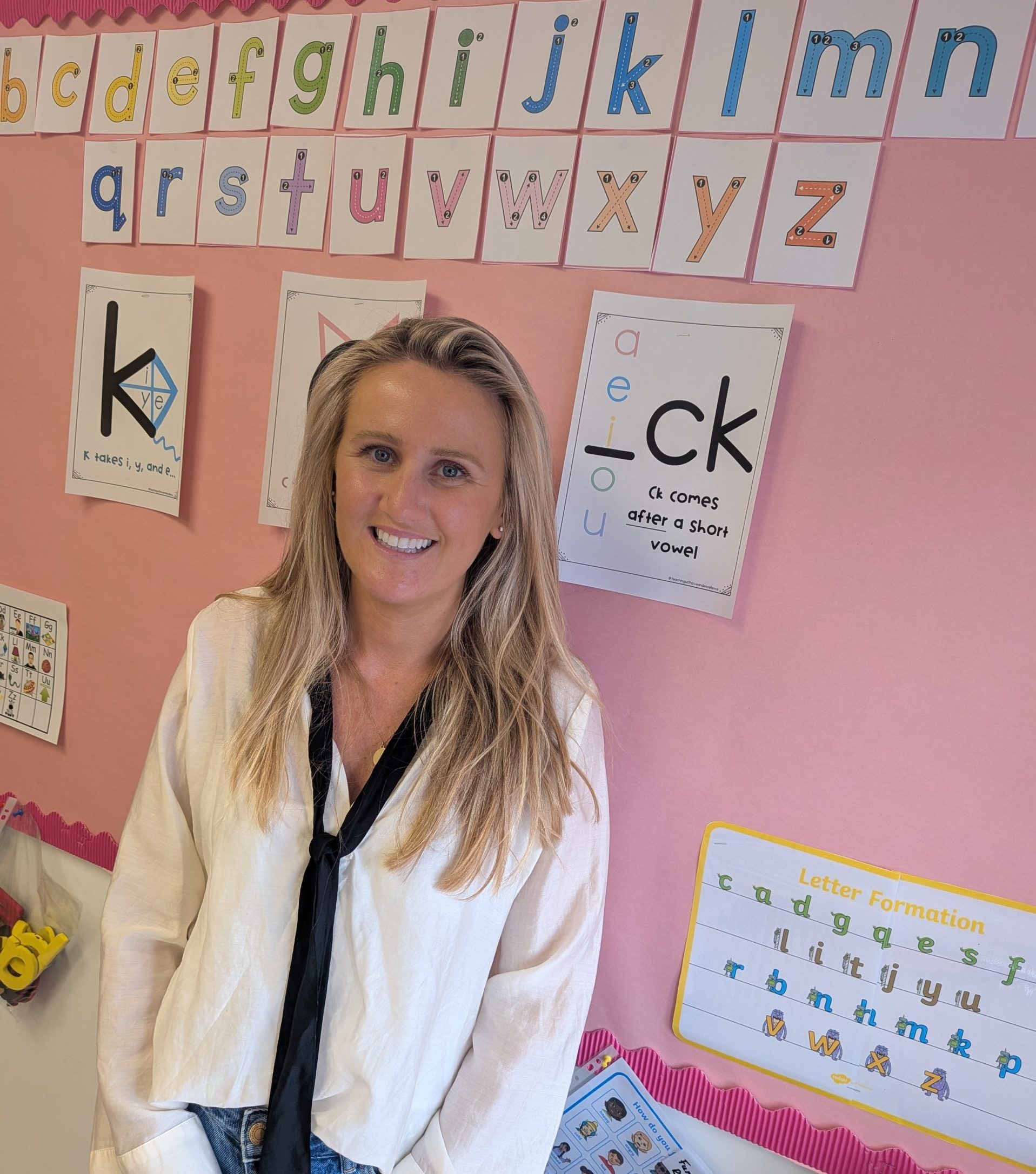
Award-winning teacher Kim Byrne (who recently received a Nessy Teacher of the Year Award for championing evidence-informed literacy instruction), recalls stepping into a special education teaching (SET) position after 13 years as a mainstream teacher. In preparation for her new role, she completed summer courses that recommended popular intervention programmes for students with reading or spelling difficulties. However, putting those techniques into practice quickly revealed their limitations.
Reflecting on an early experience with the SNIP programme, Kim observed: “The way it was explained on the course, I really bought into it. I printed out the teacher pages, printed out the pupil booklet. And then, a week and a half into it, we met as a SET team. And when we looked into it more, it turns out that this programme, that we’d been encouraged to use, was way out of line with research-based practice, and there were very little benefits for dyslexic learners.”
Kim set out to find more rigorous, evidence-based approaches, and as part of this she was supported by her school to attend specialised dyslexia training over a series of evenings and weekends. This professional learning highlighted structured literacy approaches such as the UFLI resources, and the value of decodable books, and it proved to be a turning point.
“My entire practice approach, my whole understanding of dyslexia and how best to support dyslexic learners, completely changed,” Kim shared. “What I learned from this second bunch of dyslexia training, really highlighted what dyslexic children need and how best to support them to help them read, spell and thrive.”
Kim explained that when she started to apply this new professional learning in her classroom the transformation was immediate. Her pupils started to learn with authentic progress. They started to enjoy lessons. And Kim’s enthusiasm and motivation also increased, as she saw the tangible progress her students were making and the impact she was having.
Kim also began to more clearly recognise the limitations of traditional approaches like levelled readers, that often rely on repetitive sentence patterns or visual cues and can lead to underlying difficulties being masked and real progress stymied. Her school started to purchase and use decodable readers as an alternative.
Kim explained: “Teaching phonics explicitly and really coaching students intensively, means that when they pick up a decodable book, they can actually use their skills, without any kind of pictures or without any kind of guessing. They can just read. The satisfaction that it brings to these children is incredible. And it’s been a game-changer for me in my teaching, and bringing back my love of teaching.”
A single teacher can change a child’s life, but there is a need for a whole-school approach to ensure that all children have a consistent experience within their school. Many teachers who complete specialised training act as peer leaders, sharing evidence-based practices through whole-school presentations during Croke Park hours. By demystifying dyslexia, explaining why some approaches don’t work, and then modelling structured lessons that do work, they build collective confidence across both SET teams and mainstream classrooms.
Kim highlighted that partnership between home and school is also really important. “Dyslexic children thrive when parents are involved as active collaborators. Seeking parental insights through discussion, sharing clear learning targets, and celebrating each bit of progress creates an environment of trust and shared success.”
Experiencing genuine success leads to anxiety replaced with pride, unlocking potential that extends far beyond the reading activity or the spelling lesson. Through their commitment to ongoing professional learning and evidence-based practice, the experience of dedicated teachers like Kim shows that with the right support, every dyslexic learner can truly flourish.